
Gallery
Jan Zrzavý (1890 - 1977)
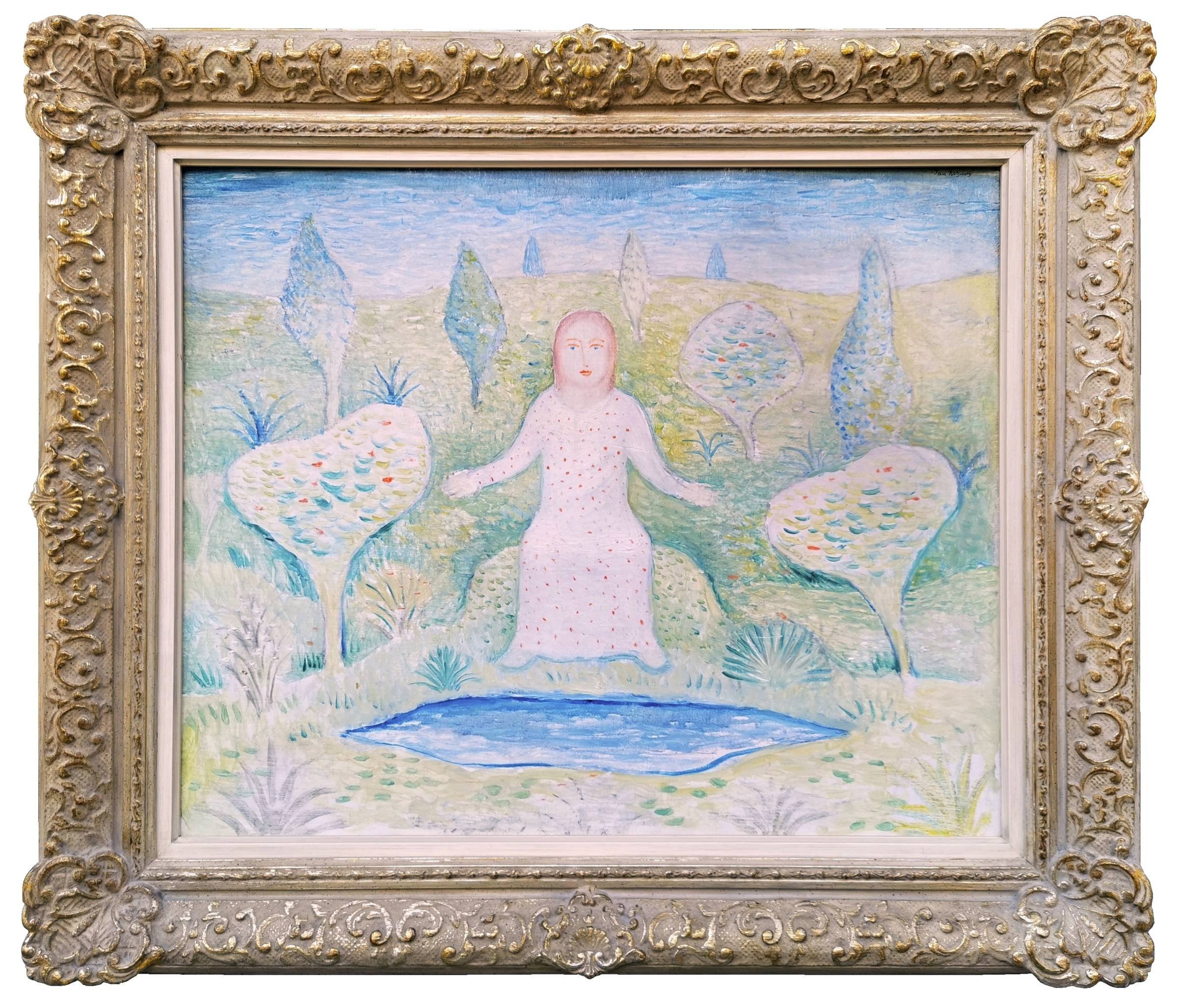
Title: Come to Me, All of You
Date: 1938
Technique: Oil on canvas
Painting dimensions: 50 × 61 cm
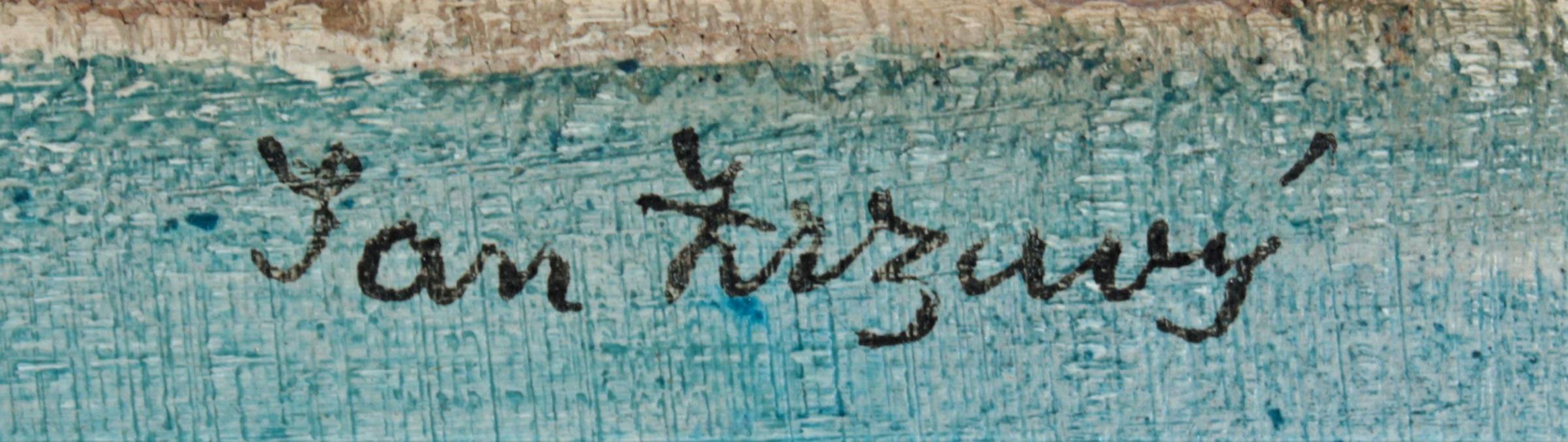
Signed: Upper right “Jan Zrzavý”
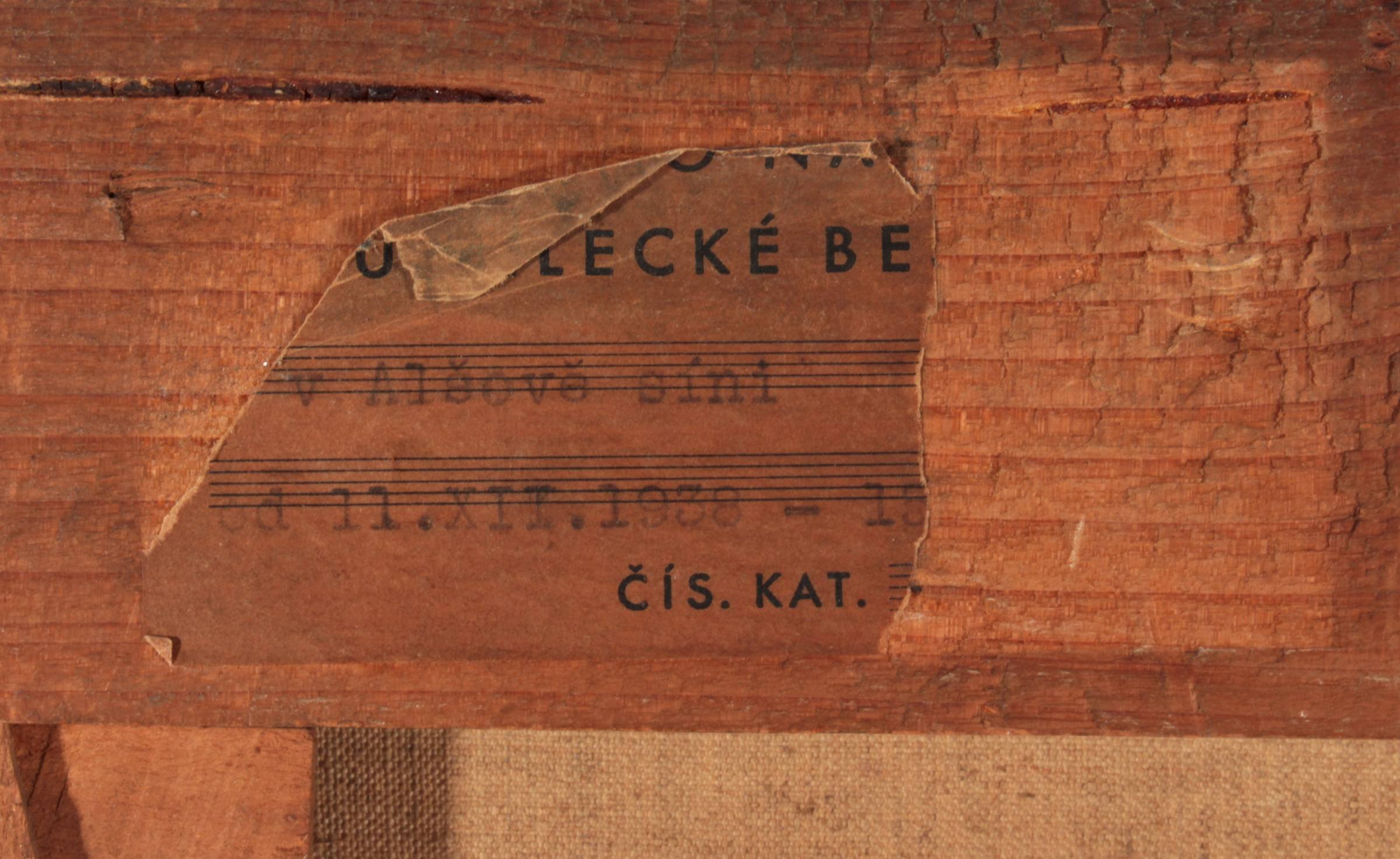
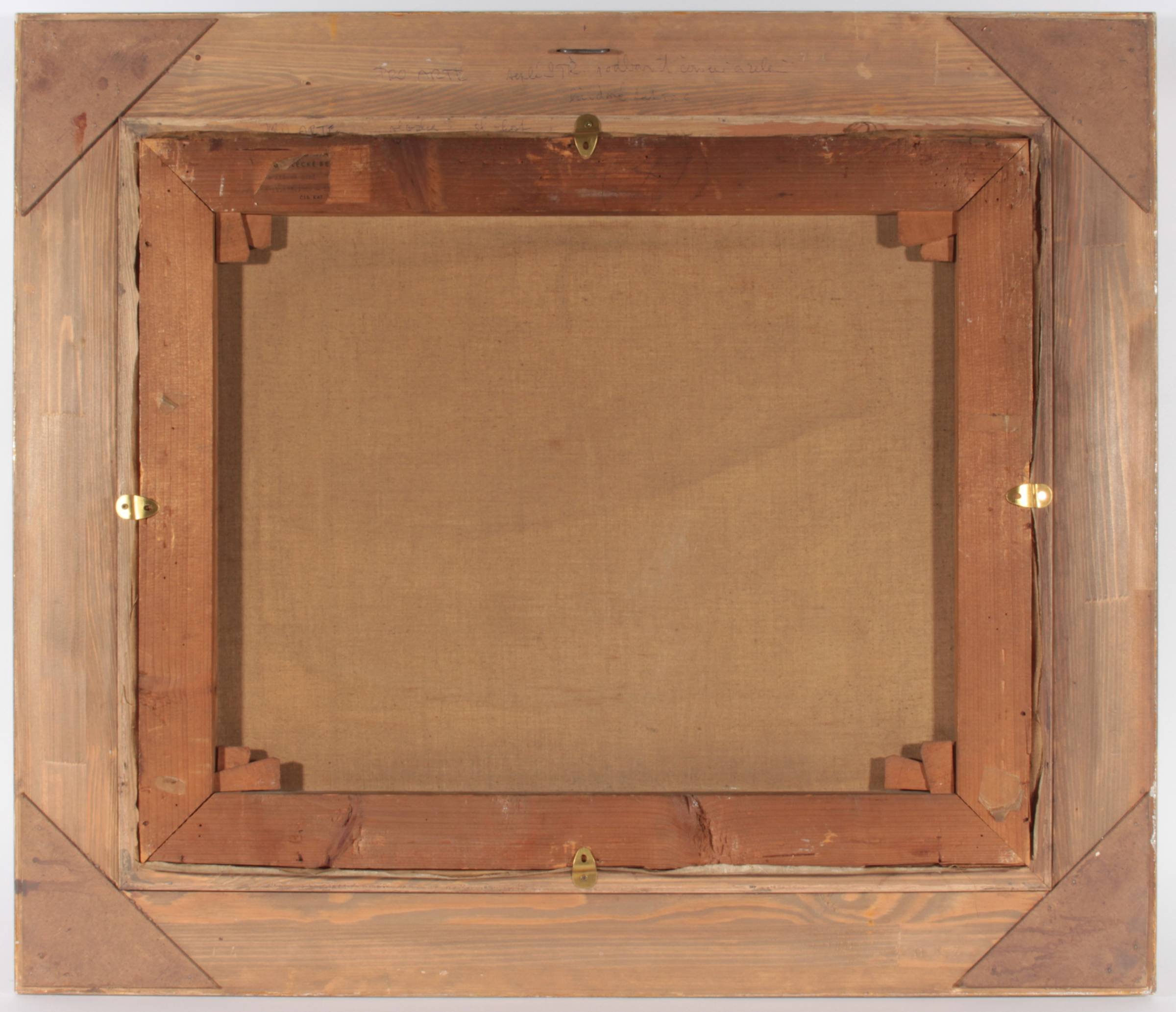
On the reverse: Exhibition label from Umělecká beseda and exhibition number 41 with the inscription “Zrzavý”
Provenance: Private collection of Ota Hofman (1928–1989), writer and screenwriter, author of books and screenplays for films for children and youth (Pan Tau, The Visitors, Odysseus and the Stars, Octopus from the Second Floor).
Exhibited:
– Jan Zrzavý – Adolf Gärtner, Exhibition of Paintings and Drawings, Alš Hall of Umělecká beseda, Prague, December 11–31, 1938, catalogue no. 36.
– On the Waves of Modernism, Galerie Pro Arte, Prague, October 22 – December 22, 2015.
– Josef Šíma – Jan Zrzavý: Paintings from Famous Collections, Adolf Loos Apartment and Gallery, Mánes, Prague, February 13–24, 2019.
– REDISCOVERED MASTERPIECES from Private Collections, November 21–30, 2019, exhibition spaces of Galerie Zlatá husa, Dlouhá 12, Prague 1. Organized by Starožitnosti–Galerie USTAR in cooperation with Art Collections URBAN; the work reproduced in the catalogue on pages 18–19.
Literature: The painting is mentioned in Jan Zrzavý – The Divine Game, edited by Karel Srp. 1st edition, published in Řevnice, Ostrava, and Prague: Arbor Vitae; Gallery of Fine Arts in Ostrava; National Gallery in Prague, 2012.
Originality: The authenticity of the work was confirmed in writing by Mgr. Kristýna Brožová, National Gallery in Prague, curator of painting – Collection of Modern and Contemporary Art.
Expert report: PhDr. Rea Michalová, Ph.D.
The assessed work Come to Me, All of You is an original, collector’s item of exceptional value and a thematically remarkable painting by Jan Zrzavý, one of the most prominent figures of European art of the 20th century. He was a member of the groups Sursum, The Stubborn Ones (Tvrdošijní), the Mánes Association of Fine Artists, Umělecká beseda, and the Association of Czech Artists and Printmakers Hollar—an artist whose unmistakable work is shaped by the “dual dwelling of the painter and the poet” (as incisively characterized by F. X. Šalda in 1925).
The painting uniquely connects a timeless biblical theme with the artist’s sense for mystery and the ineffable—rooted in Symbolism—and an intensely personal reflection on contemporary historical events. The canvas depicts a centrally placed, androgynous figure of Jesus Christ with outstretched arms, dressed in a white, dotted robe, seated on a small hill before a modest “oasis” in a landscape of stylized trees and low grasses. It is an interpretation of the Gospel of Matthew 11:28: “Come to me, all who labor and are burdened, and I will give you rest.” The simple composition and deliberately naïve form draw inspiration from Italian primitives, especially the work of Giotto di Bondone (1267–1337), paying homage to them. The painting unfolds a refined harmony of delicately nuanced pastel colors, rhythmized by gentle lines and unforced brushstrokes. Here, Jan Zrzavý masterfully expressed his vision of harmony in the world at the time of the fateful Munich events of 1938.
This enchanting, introspective work could be characterized by the artist’s own words, once addressed to the work of Josef Čapek, which fully capture Zrzavý’s own artistic endeavor:
“…it is shy and modest, standing aside alone and in a corner in fear of intruding. It does not shout, does not boast, pretends to nothing. It is supremely chaste, full of tenderness and the most fragile and sacred feelings.”
The work is reproduced in the catalogue for the exhibition Czech Artists in France – FOR CZECHOSLOVAKIA: A Tribute to a Non-Existent Country, ISBN 978-80-260-9880-5.
Excerpt from the catalogue text:
Jan Zrzavý’s painting, created in direct response to the Munich Agreement, Come to Me, All of You, an oil painting from the autumn of 1938, may be described as a revelation—already by virtue of its subject. Matthew quotes Christ’s words: “Come to me, all who labor and are burdened, and I will give you rest” (Mt 11:28). The context in which these words were spoken in Christ’s time and in the autumn of 1938 is equally evident: “From the days of John the Baptist until now the kingdom of heaven suffers violence, and the violent take it by force” (Mt 11:12). In the period immediately following the Munich diktat, the atmosphere in Bohemia was one of oppression, akin to a sense of condemnation. For Jan Zrzavý, a devout Roman Catholic, this did not result in a spiritual crisis—quite the opposite. Escape from total destruction—virtually an apocalypse—was possible only through faith in the all-embracing arms revealed in the painting. Christ’s embrace extends from an idyllic landscape to all the faithless and despairing, burdened by betrayal, isolation, and the darkest visions. Although those visions were tragically fulfilled in the years that followed, those who did not lose faith in divine and human justice found redemption and peace seven years later. In December 1938, Zrzavý offered his response by painting this work and hanging it in the Umělecká beseda exhibition on Prague’s Lesser Town. At a time when all seemed lost, faith in a better future shone all the more brightly—an artistic act, a cipher, a consoling gesture, and a profoundly personal statement.
Interesting note: Jan Zrzavý maintained close friendships with filmmakers; director Antonín Moskalyk made a documentary about him. Zrzavý also appeared on film, playing himself in the children’s movie Káťa and the Crocodile, based on a screenplay by Ota Hofman—from whose collection the work presented here originates.