
Gallery
Jitka Kolínská (1930 – 1992)
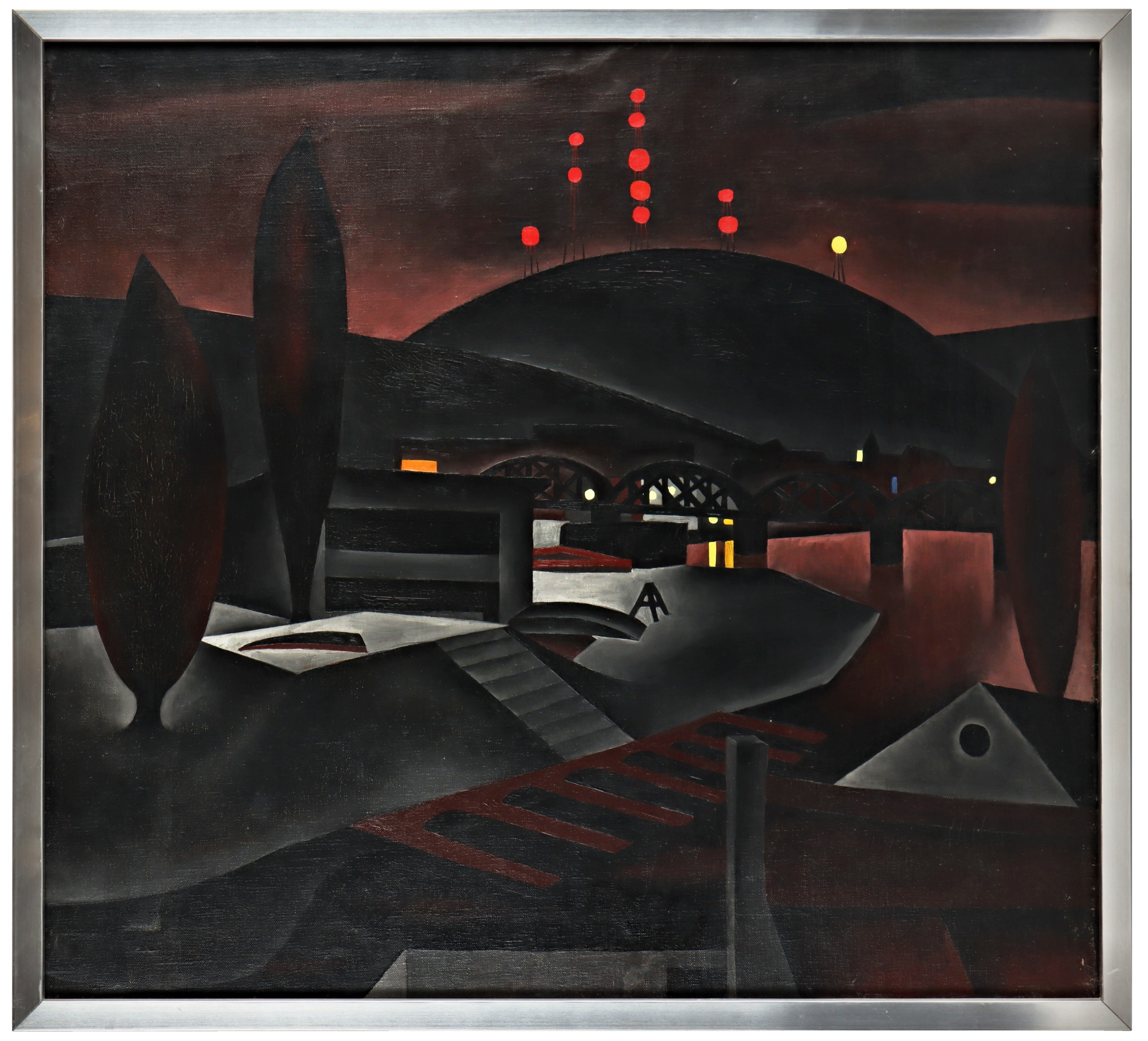
Night in Podolí, 1960, oil on canvas, signed on the reverse Jitka Kolínská with the artist’s title and date; the stretcher bears the stamp of the frame and moulding manufacturer Lira; painting dimensions 59.5 × 65 cm, overall dimensions including frame 62.5 × 68.5 cm; very good original condition, see photo, with minor damage.
Exhibited: Galerie Fronta, Prague, 1991 (the last solo exhibition of Jitka Kolínská).
Provenance: Important private collection, originally acquired directly from the artist.
Expert report: PhDr. Rea Michalová, Ph.D.
From the report:
The submitted painting “Night in Podolí” is a collector’s exclusive, stylistically characteristic, and magically evocative work by Jitka Kolínská, one of the greatest Czech painters and a member of the Máj Creative Group (1957–1961). During her lifetime she was admired throughout Europe, and several German painters’ groups even sought her membership.
The presented painting “Night in Podolí” is a work of high collector’s value and extraordinary suggestive power, splendidly representing the artist’s magical visual poetics. Paintings by Jitka Kolínská of this type, which created a new form of perceived reality, possessed their own visual life, meaning, and order, and at exhibitions of the Máj 57 group appeared literally as revelations. As her artistic colleague Miloslav Chlupáč—whose sensibility was very close to hers—observed at the time, Kolínská’s works had a firm form, at first glance far removed from “ordinary impressionistic realism,” and were composed with confidence and an unmistakably personal elegance. Kolínská was able to avoid anything forced; she always depicted only what she inwardly identified with, what was close to her. For this reason as well, everything she painted is characterized by an extraordinarily strong atmosphere. Every depicted element in the painting has its own importance and meaning.
The submitted painting “Night in Podolí” is a brilliant example of the artist’s magical realism, which even demonstrates undeniable links to its stylistic position in the 1920s, especially in the work of members of the Devětsil Artists’ Association. Beyond reflecting an immediate experience, Kolínská here clearly aligns herself with the Czech modernist tradition, also represented by the name of Bohumil Kubišta, from whose artistic legacy not only the entire generation of the 1920s but also much later generations drew inspiration. Like Kubišta, Kolínská employs a nobly restrained color palette and the method of so-called “penetrism,” the illumination of forms, which then creates a magical impression.
“Night in Podolí” by Jitka Kolínská is one of the beautiful and rare examples of the artist’s admirably coherent body of work, which, as Dr. František Dvořák wrote, “is not a search for a new path, but its miraculous discovery.”
Other products
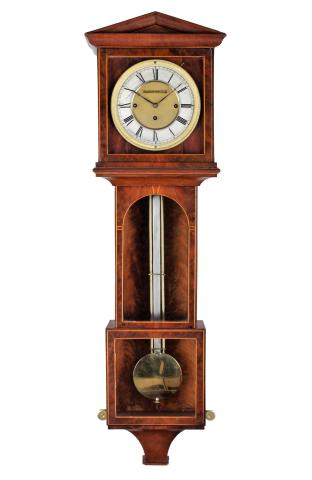
Miniature wall clock - Laterndluhr
Wall-mounted pendulum clock, so-called lantern clock, circa 1830, Vienna; dial signed I. Vlaschitz in Wn. Neustadt (Ignatz Vlaschitz in Wien Neustadt).
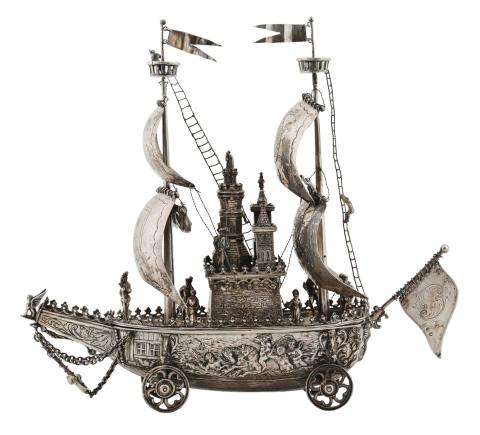
Silver model of a ship with figural decoration
Germany, Hanau, 19th century. Two-part silver model of a ship with rich figural and sculptural decoration, comprising a total of 12 figures.
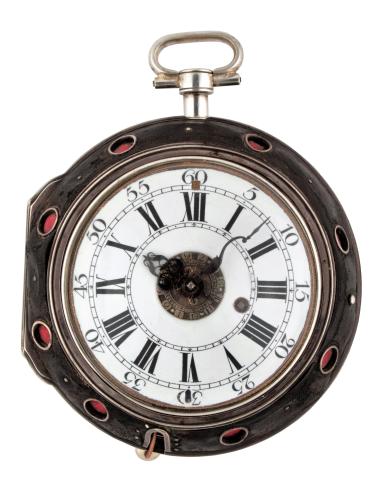
Large Baroque carriage clock – Joseph Spiegel
Germany, Friedberg, Joseph Spiegel (Joseph Miroir), circa 1740. Large double-cased traveling striking clock with date display and alarm.
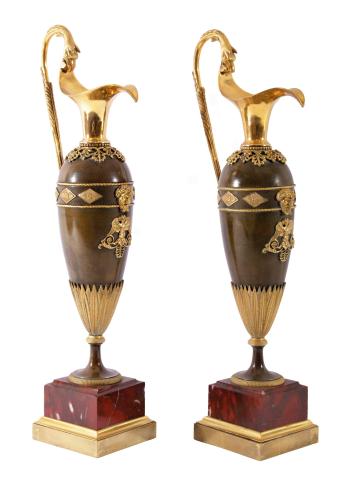
Pair of Empire teapots – Claude Galle
France, Paris, circa 1810. A luxurious pair of bronze ewers produced in the renowned workshop of Claude Galle (1759–1815).